Featured StoryEditor's Pick
Latest Articles
Expert-reviewed articles on personal wellness, medical breakthroughs, nutrition, and the science of living well.
An independent health journalism site sharing evidence-based information in plain language — for curious readers, not patients.
Every article is grounded in peer-reviewed research and guidelines from reputable health authorities.
Our articles are health journalism, not medical advice. They inform conversations with your doctor — they don't replace them.
Each article ends with a "Further Reading" section linking to the studies and authorities behind our claims, so you can verify them yourself.
AliveAndKicking Health is a health journalism site, not a medical service. We share evidence-based information — but information is not the same as medical advice. The articles on this site are intended for general educational purposes only.
Nothing you read here should be used to diagnose a condition, choose a treatment, change a medication, or replace a conversation with a qualified healthcare professional. If you're worried about something specific to your body, please talk to a doctor or other licensed provider — they can do the one thing we cannot, which is examine and treat you.
If you're experiencing a medical emergency, call your local emergency number immediately.
We're a small, independent publication. Our editorial process is straightforward and transparent: every article is written from current peer-reviewed research, guidelines from established health bodies (such as the World Health Organization, national health authorities, and major medical societies), and consensus statements published in respected journals.
To make our work verifiable, every article includes a Further Reading section at the bottom that links directly to the studies and sources we relied on. We believe credibility comes from showing the sources, not from claiming authority. If you ever want to check a claim we make, the source should be one click away.
No. AliveAndKicking Health publishes general health information for an educational, lay audience. Nothing here is intended to diagnose, treat, prevent, or cure any condition. For medical advice tailored to your situation, please speak with a qualified healthcare professional.
Every article includes a "Further Reading" section at the bottom linking to the peer-reviewed studies, official guidelines, or expert sources behind our claims. You don't have to take our word for it — the citations are there for you to verify directly. If you ever find a claim that isn't supported by the source we cite, please tell us via the Contact page and we'll correct it.
AliveAndKicking Health is a small, independently operated publication. We don't claim to have a team of doctors on staff — what we have is a commitment to research and transparent sourcing. Where individual articles benefit from being attributed to a specific author, we'll note it; where they don't, we publish them under our editorial banner.
You should make health decisions in consultation with a qualified healthcare provider who knows your medical history. What our articles can do is help you ask better questions, understand the landscape of a topic, or recognize when something is worth bringing up at your next appointment. Use them as a starting point for conversations, not as a substitute for them.
We publish new articles regularly and revise older ones when significant new research changes the picture. When an article is meaningfully updated, we add a dated note. Health science is a moving target — we try to keep up, but recommend always checking the publication date on any article and considering whether newer evidence may have emerged.
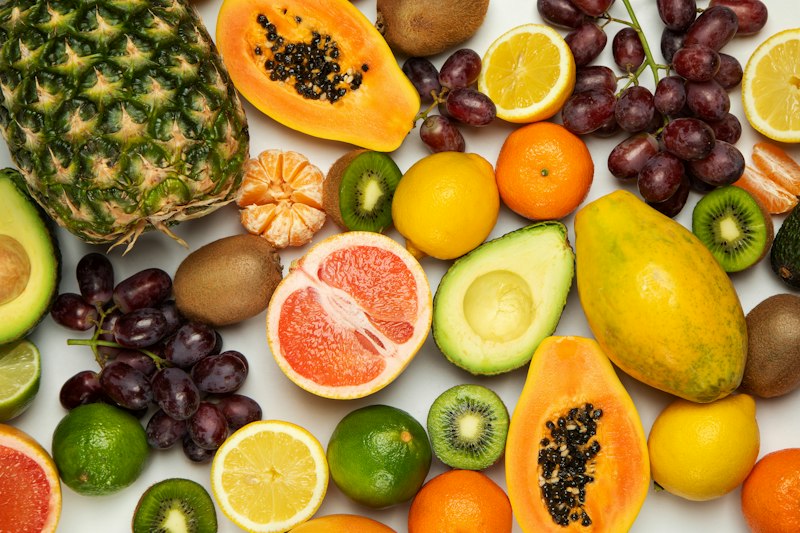
Which fruits actually deliver the most nutritional value per bite, and does the popular ranking survive scrutiny when you look at what long-term prospective studies show about disease outcomes? A synthesis of the CDC's nutrient density scoring, Harvard's Nurses' Health Study data on specific fruits and type 2 diabetes, the largest fruit-and-vegetable mortality meta-analysis to date, and the Circulation anthocyanin data produces a ranking that partially agrees with the popular wisdom and partially surprises. Here are the 10 most nutritious fruits by the evidence, and the honest guidance on how to eat them.
Health articles love top-10 fruit lists. Most of them rank fruits on one dimension — usually a nutrient-density score, sometimes just vitamin C or fiber content — and produce lists that look confidently authoritative and quietly overlook the fact that eating patterns are not the same as nutrient checklists. Fruits that score high on nutrient density sometimes underperform in long-term disease-outcome studies. Fruits that score modestly on nutrient density sometimes have among the strongest observational associations with reduced disease risk, because the phytochemicals doing the work aren't in the nutrient-density formulas.
A more defensible top-10 list draws on three complementary sources of evidence: a validated nutrient density scoring system (best captured by the 2014 CDC Preventing Chronic Disease study that defined "powerhouse fruits and vegetables"), long-term prospective cohort data on specific fruits and disease outcomes (best captured by the Harvard Nurses' Health Study/Health Professionals Follow-up Study analysis), and the meta-analytic evidence base on fruit intake and total mortality (best captured by the 2017 International Journal of Epidemiology meta-analysis of 95 prospective studies).
Cross-referencing these produces a list that is somewhat different from what the internet's most-shared fruit rankings suggest. Here is what the actual evidence supports.
The 2014 CDC Preventing Chronic Disease study by Jennifer Di Noia scored fruits and vegetables using a nutrient-density formula: percentage of daily value per 100 calories across 17 nutrients considered protective against chronic disease [1]. Of the fruits examined, only six met the strict "powerhouse" threshold: lemon (score 18.72), strawberry (17.59), orange (12.91), lime (12.23), pink/red grapefruit (11.64), and white grapefruit (10.47). The paper explicitly acknowledged an important limitation: because the formula couldn't include phytochemicals (like the anthocyanins in blueberries), fruits rich in those compounds are undervalued by the scoring system [1].
The 2013 BMJ analysis by Isao Muraki and colleagues at Harvard pooled data from three prospective cohorts — the Nurses' Health Study, Nurses' Health Study II, and Health Professionals Follow-up Study — covering more than 187,000 participants across 3.5 million person-years of follow-up. Individual fruits were analyzed separately for their association with incident type 2 diabetes [2]. The 2017 IJE meta-analysis by Dagfinn Aune and colleagues pooled 95 prospective studies covering roughly 2 million participants and looked at fruit intake in relation to cardiovascular disease, total cancer, and all-cause mortality [3]. The 2013 Circulation analysis by Aedín Cassidy and colleagues followed 93,600 women in the Nurses' Health Study II and specifically examined anthocyanin-rich fruits and myocardial infarction risk [4].
Taken together, these four sources give a defensible picture of what the evidence actually supports. Here are the ten fruits that come out best. All specific numerical findings below draw from these four sources.
If any fruit has consistently emerged as an outlier in prospective studies, it is blueberries. The Muraki analysis found that three servings per week of blueberries was associated with a 26% lower risk of type 2 diabetes — the largest effect size for any individual fruit examined, roughly double the effect for grapes and about three times the effect for apples [2]. The Cassidy Circulation analysis found that women in the highest quintile of anthocyanin intake had a 32% lower risk of myocardial infarction, with blueberries and strawberries being the primary dietary sources [4]. Blueberries do not score well on the CDC's powerhouse nutrient-density formula (they didn't meet the threshold), which is exactly the pattern the CDC paper warned about: nutrient density formulas miss anthocyanins.
**How to eat them:** Fresh is ideal but frozen is equivalent — the anthocyanins survive freezing well. Aim for at least three servings per week (half a cup counts as a serving). They pair naturally with plain Greek yogurt, oatmeal, or on their own. Blueberry juice does not deliver the same benefit — see the whole-fruit-versus-juice section below.
Strawberries were second only to lemons in the CDC nutrient density ranking (score 17.59) and are a major dietary source of anthocyanins alongside blueberries. The Cassidy analysis specifically identified strawberries plus blueberries as the anthocyanin combination most consistently associated with reduced cardiovascular events. Interestingly, strawberries alone did not show a significant type 2 diabetes protective effect in the Muraki analysis (hazard ratio 1.03, not statistically distinguishable from no effect) — a reminder that different disease endpoints can show different patterns for the same fruit.
**How to eat them:** Fresh is best; the vitamin C and anthocyanin content declines with time after picking. Rinse just before eating rather than storing washed, since surface moisture accelerates decay. Frozen strawberries retain most nutrients and are fine for smoothies. Avoid strawberries preserved in sugar syrup, which negates most of the metabolic advantages.
Oranges scored 12.91 on the CDC powerhouse index — comfortably above the threshold — and are one of the most reliable dietary sources of vitamin C, folate, thiamine, and potassium. A typical medium orange provides more than 90% of the recommended daily vitamin C intake with about 60 calories, along with 3 grams of dietary fiber that whole oranges retain and juice does not. The Aune meta-analysis identified citrus intake as a subgroup with independent associations to reduced coronary heart disease and stroke risk.
**How to eat them:** Peel and eat the whole segments, including the white pith — that's where most of the flavonoids concentrate. If you juice oranges, the finding that fruit juice is associated with increased type 2 diabetes risk (discussed below) applies. A whole orange is a substantially different food than the equivalent volume of orange juice.
Apples were associated with a 7% lower type 2 diabetes risk per three servings per week in the Muraki analysis and are one of the most consistent contributors to fiber intake in Western diets. Much of the fiber and most of the polyphenols in apples are concentrated in the skin, so peeled apples lose a substantial portion of their nutritional value. The Aune meta-analysis found that apples and pears as a subgroup had independent associations with reduced cardiovascular disease risk.
**How to eat them:** With the skin on, whenever possible. Organic is preferable if peel exposure to pesticide residues is a concern, but standard washing removes most surface residues. Avoid apple juice for the same reasons as orange juice. An apple with about a tablespoon of natural peanut butter is a well-balanced snack.
Grapes were associated with a 12% lower type 2 diabetes risk per three servings per week in the Muraki analysis — the second-largest effect for any individual fruit after blueberries. Grapes are also anthocyanin-rich (particularly red and purple varieties) and contain resveratrol, though the resveratrol content in whole grapes is far too low to produce the effects seen in laboratory studies using concentrated supplements — the resveratrol-in-grapes framing is one of the more overstated wellness claims.
**How to eat them:** Whole, including the skins, which are where most of the anthocyanins and resveratrol concentrate. A serving is about a small handful (roughly 15-20 grapes). Grapes are relatively high in natural sugar per serving, so they're not ideal as a bulk snack for people managing blood glucose, but the whole-fruit form remains net beneficial according to the Muraki data.
Both pink/red and white grapefruit met the CDC powerhouse threshold (11.64 and 10.47 respectively) and grapefruit was associated with a 5% lower type 2 diabetes risk in the Muraki analysis. Pink/red grapefruit additionally contains lycopene, the same carotenoid abundant in tomatoes and associated with reduced prostate cancer risk in some cohort studies.
**Important caveat:** Grapefruit interacts with a substantial list of common medications by inhibiting the CYP3A4 enzyme in the intestine, potentially elevating drug levels to dangerous concentrations. The list includes several statins, some blood pressure medications, certain immunosuppressants, and some psychiatric medications. If you take any prescription medication, check with your pharmacist or physician about grapefruit interactions before making it a regular part of your diet.
**How to eat them:** Fresh, cut in half with a small spoon, or peeled and eaten in segments. A small amount of added sugar is often used but usually unnecessary — the tartness is part of the eating experience.
Lemons topped the entire CDC powerhouse ranking for fruits with a score of 18.72; limes scored 12.23. Both are exceptionally dense in vitamin C and citric acid relative to their calorie content. Their practical difficulty is that they're rarely eaten in the quantities that would produce measurable health effects — few people eat a whole lemon at once. Their nutritional value is mostly realized through incorporation into other foods and drinks.
**How to eat them:** Zest (the outer colored peel) contains a high concentration of flavonoids and essential oils and is safe and flavorful when added to cooked dishes, salad dressings, and baked goods. Squeezed juice adds flavor and acidity to virtually anything. A wedge in water is not going to transform your health, despite the popularity of that framing, but it is a very-low-calorie way to make water more appealing if that helps you drink more of it.
Avocado is technically a fruit and is nutritionally distinct from other fruits on this list — it is high in fat (about 15 grams per medium avocado, mostly monounsaturated oleic acid), low in sugar, and rich in fiber, potassium, folate, and vitamin K. Avocado did not appear in the Muraki type 2 diabetes analysis (which focused on typical Western fruit consumption at the time), but subsequent cohort data has consistently associated regular avocado intake with modest reductions in cardiovascular disease risk, likely reflecting the substitution effect of replacing saturated animal fats with monounsaturated plant fats.
**How to eat them:** With almost anything savory. On toast, in salads, in smoothies (where the fat helps the absorption of fat-soluble nutrients from other ingredients), as guacamole. Half an avocado is a reasonable serving. The calorie density is meaningful — a whole avocado is roughly 250-300 calories — so factor this into total intake for people managing weight.
Bananas were associated with a 5% lower type 2 diabetes risk in the Muraki analysis and are one of the most reliable dietary sources of potassium, which is chronically under-consumed in Western diets and matters for blood pressure regulation. They also contain resistant starch (particularly slightly-under-ripe bananas), which functions similarly to fiber in the digestive tract and feeds beneficial gut bacteria.
**How to eat them:** Ripeness affects the sugar and starch content substantially. A slightly green banana has more resistant starch and lower blood glucose impact than a fully ripe one; a browning banana is sweeter but higher glycemic. Both are net beneficial in the whole-fruit form. Avoid banana chips, which are typically fried in oil and coated in sugar and have very different nutritional properties than the whole fruit.
Pomegranate is the one fruit on this list where the strongest evidence comes not from the CDC nutrient-density work or the Nurses' Health Study, but from a series of smaller intervention studies on cardiovascular outcomes. The active compounds are unique to pomegranate: punicalagins, which the gut microbiota convert into urolithins, which appear to have real anti-inflammatory and endothelial effects. Multiple smaller trials have suggested modest improvements in blood pressure, arterial stiffness, and LDL oxidation with regular pomegranate juice consumption.
**How to eat them:** The seeds (arils) are what you eat — pop them from the fruit, add them to salads, yogurt, or eat them straight. Pomegranate juice is the one exception to the general "avoid fruit juice" recommendation because most of the intervention studies used juice, but even then, small amounts (about a quarter cup daily) achieve most of the studied benefit without adding excessive sugar.
The most surprising and practically important finding from the Muraki analysis is not any specific fruit ranking — it is the whole-fruit-versus-juice contrast. While whole fruit consumption was associated with reduced type 2 diabetes risk, fruit juice consumption was associated with an 8% *increased* risk per three servings per week [2]. This holds even for freshly squeezed 100% fruit juice, which is often marketed as equivalent to whole fruit.
The plausible mechanism: juicing removes the fiber that slows the absorption of the natural sugars, produces a much faster glucose and insulin response, and delivers the same or higher caloric load in a form that doesn't produce the satiety of eating whole fruit. A person can drink 8 ounces of orange juice in a minute; eating four whole oranges in the same time is essentially impossible.
The practical implication is straightforward: prefer whole fruits. Fruit juice as an occasional beverage is not a health disaster, but it is not the health food the marketing suggests. Smoothies made with whole fruits (skins, pulp, and all) retain most of the fiber and behave much more like whole fruit than like juice.
The evidence-supported practical guidance is unusually simple:
**Aim for variety.** The 2017 Aune meta-analysis found that the strongest all-cause mortality benefit came at approximately 800 grams per day of fruits and vegetables combined (roughly 10 average servings), with the benefit plateauing beyond that [3]. There is no evidence that focusing on any single fruit produces a benefit larger than eating a variety.
**Prefer whole fresh, then whole frozen, then dried without added sugar.** Fresh whole fruits are the ideal, but frozen fruits retain most nutrients and are often cheaper and less waste-prone. Dried fruits are more calorically dense per serving and easy to over-eat, but retain most of the nutritional value; watch for added sugar in commercial dried fruit.
**Include at least two colors per day.** Different phytochemical families cluster by color: blue and purple are anthocyanin-rich; orange and yellow are carotenoid-rich; red often signals lycopene; green often signals chlorophyll and folate. Mixing colors is a rough but reasonable proxy for phytochemical variety.
**Skip fruit juice as a daily beverage.** The Muraki data on juice and diabetes risk is clear enough to matter in practice.
**Distribute intake across meals.** Eating four servings across breakfast, lunch, an afternoon snack, and dessert distributes the antioxidant and fiber content across the day rather than producing one large spike. This also improves total intake by simply making fruit more available at the times you're actually hungry.
**Do not obsess over any single fruit.** No fruit is a "superfood" in the sense that eating large quantities of it will produce disproportionate benefit compared to eating a varied diet with a normal amount of fruit. The wellness-industry framing of specific fruits as transformative individual foods is not what the evidence supports — variety, whole-fruit form, and consistency over years are what the epidemiological evidence supports.
A few common claims worth being cautious about:
**"Superfood" branding as it applies to specific fruits.** The label is a marketing term with no scientific definition. Blueberries, açaí, goji, and dragon fruit have all been marketed as superfoods; the actual evidence supports the idea that fruits with high anthocyanin content are net beneficial (blueberries and strawberries have particularly strong data), but no single fruit produces the transformative results the "superfood" framing implies.
**Detox or cleansing claims.** No fruit "detoxifies" the body. The liver and kidneys do that continuously. Fruit consumption supports overall health but is not doing something special mechanistically that the word "detox" describes.
**Concentrated fruit extracts and supplements.** The evidence base on whole fruits does not necessarily transfer to concentrated fruit extracts, powders, or supplements. The Cassidy and Muraki studies specifically measured whole fruit intake, and the observed benefits may reflect the food matrix (fiber, phytochemicals, minerals interacting together) rather than any single compound.
The 10 fruits above — blueberries, strawberries, oranges, apples, grapes, grapefruit, lemons/limes, avocado, bananas, and pomegranate — are supported by different but converging evidence bases. Some (lemons, strawberries, oranges, grapefruit) rank highly in nutrient-density scoring. Some (blueberries, grapes, apples) show robust protective associations in long-term prospective cohort studies. Some (blueberries, strawberries, pomegranate) are the anthocyanin-rich sources most consistently linked to reduced cardiovascular events. Together, they form a defensible top-10 list.
The most important practical takeaway is not the ranking itself. It is: eat whole fruits regularly, prefer variety over obsession with any single fruit, avoid fruit juice as a daily habit, and think of the goal as roughly 2-4 servings of fruit per day incorporated into meals and snacks. That pattern is what the epidemiological evidence supports as beneficial, and it is achievable at a modest cost with easily available fruits.
If you have specific health conditions that affect fruit intake — diabetes management concerns, kidney disease affecting potassium intake, medication interactions like the grapefruit-statin issue — talk to your healthcare provider or a registered dietitian about how to adapt these general recommendations to your particular situation. For everyone else, the honest guidance is close to what your grandmother would have told you: eat your fruits, eat them whole, and eat a mix.
How AliveAndKicking Health handles your data, in plain language.
AliveAndKicking Health Media ("we", "our", "us") operates this website. If you have questions about this policy or how your data is handled, you can reach us through the contact information on our About page.
You don't need to create an account, subscribe, or give us any personal information to read articles. We don't run comment sections, email capture forms, or user registration for readers.
When you visit the site, our hosting provider (Netlify) logs the following in line with standard internet practice:
These logs are kept by Netlify for a limited period for security and performance purposes. We do not read or analyse these logs ourselves.
We use your browser's localStorage — which functions similarly to cookies — to store a small amount of data locally on your device:
ak_local_articles, ak_local_nextid) — a copy of the articles list, so the site loads quickly and works offline. Strictly necessary for site function.ak_cookie_consent) — records your choice on the cookie banner, so we don't show it repeatedly.This data stays on your device. It is never sent to us or to any third party.
The fonts used on this site (Playfair Display and Source Sans 3) are self-hosted from our own server. No third-party font service receives requests from your browser. Both fonts are licensed under the SIL Open Font License.
If you consent to "Accept all" cookies, this site displays advertisements. Ads uses cookies and similar technologies to serve ads based on your prior visits to this site or other websites.
Our site is hosted on Netlify. Their privacy practices are documented at netlify.com/privacy.
If you are in the European Economic Area, the United Kingdom, or Switzerland, you have the following rights regarding any personal data we hold:
Since we collect almost no personal data directly, most of these rights are satisfied by you simply clearing your browser's site data. For anything else, contact us.
Our content is intended for a general adult audience. We do not knowingly collect data from children under 16. If you believe a child has provided us with data, please contact us and we will take steps to delete it.
You can change your cookie preferences at any time by clicking the button below. This will clear your previous choice and re-show the consent banner.
Browser storage persists until you clear it or withdraw consent. Netlify's server logs are retained according to their policy. We do not maintain separate databases of reader data.
Our hosting provider (Netlify) may process data in jurisdictions outside the EEA, including the United States. Netlify participates in appropriate data transfer frameworks such as the EU-US Data Privacy Framework and uses Standard Contractual Clauses where applicable.
If we update this policy, we will update the "Last updated" date at the top. For significant changes, we may re-show the consent banner.
For any privacy-related questions or to exercise your rights, please reach out via the contact details on our Contact page.
The ground rules for using AliveAndKicking Health.
By accessing and using AliveAndKicking Health ("the Site"), you accept and agree to be bound by these Terms of Use. If you do not agree to these terms, please do not use the Site.
All articles, images, graphics, and other content on this Site are protected by copyright and are the property of AliveAndKicking Health Media unless otherwise noted. You may read and share links to our articles freely. You may not republish, redistribute, or reproduce our content in whole or in substantial part without prior written permission.
AliveAndKicking Health, its authors, editors, and affiliates are not liable for any actions taken based on information found on this Site. Reliance on any information provided here is solely at your own risk.
We strive to provide accurate, up-to-date, and well-researched content. However, medical and health research evolves constantly, and we cannot guarantee that every article reflects the absolute latest consensus. If you spot an error, please let us know via the Contact page.
Our articles may contain links to third-party websites. We do not endorse, control, or take responsibility for the content or practices of these external sites. Visiting them is at your own discretion.
The Site may display advertisements served by Ad networks. We do not endorse the products or services advertised. Advertiser relationships are disclosed in our Privacy Policy.
You agree not to use the Site in any way that:
To the fullest extent permitted by applicable law, AliveAndKicking Health Media and its contributors shall not be liable for any indirect, incidental, special, consequential, or punitive damages arising from your use of or inability to use the Site.
We may update these Terms from time to time. The "Last updated" date at the top indicates the most recent revision. Continued use of the Site after changes constitutes acceptance of the revised Terms.
For questions about these Terms, please reach out via our Contact page.
What this site is — and what it isn't. Plain language about the limits of the information we publish.
If you are experiencing a medical emergency, call your local emergency number or visit the nearest emergency department immediately. Do not use this site to seek help for an urgent or life-threatening situation.
Reading articles on AliveAndKicking Health does not create a doctor-patient, therapist-client, or any other professional relationship between you and the site, its contributors, or anyone associated with it. We are journalists writing about health research, not licensed clinicians providing care. We cannot assess your individual circumstances, examine you, review your medical history, or prescribe anything.
We do our best to provide accurate, well-sourced, and current information. Every article cites peer-reviewed research, official health guidelines, or other primary sources, and we link to those sources at the bottom of each piece so you can verify the underlying evidence.
That said, medical and scientific understanding evolves continuously. New research can change what is considered best practice, sometimes within months. While we aim to update articles as significant new evidence emerges, we cannot guarantee that every article reflects the absolute latest consensus at the moment you read it. When making decisions that affect your health, please verify with a qualified professional and check whether more recent research has emerged.
If you spot an error, please contact us — we publish corrections promptly with a dated note.
Our articles link to external sources — peer-reviewed studies, news outlets, health organizations, and similar resources — to allow readers to verify our claims. Linking to a source does not constitute a general endorsement of that source's other content, services, or commercial offerings. We endorse only the specific information cited, in the context cited.
We have no control over external websites and cannot guarantee that linked content remains accurate, available, or unchanged after we publish.
This site may display advertisements served by third-party advertising networks. Advertisements are clearly distinguished from editorial content. We do not endorse or vouch for products or services advertised on the site, and we do not have editorial control over which ads are shown to individual readers.
We do not accept payment in exchange for editorial coverage. Articles are not influenced by advertiser relationships.
Our articles sometimes evaluate commercial products — supplements, diets, devices, treatments, or wellness services — based on the available scientific evidence. These evaluations are editorial opinions grounded in cited research. They are not personal recommendations for you specifically. A product we describe as well-supported by evidence may still be inappropriate for your individual circumstances; a product we describe as overhyped may still have niche legitimate uses. Always discuss specific products with a qualified professional before using them, especially if you have existing health conditions or take medications.
You are responsible for your own health decisions. Information from this site is one input among many that should inform those decisions, alongside guidance from your healthcare providers, your knowledge of your own body, and other reliable sources.
To the fullest extent permitted by applicable law, AliveAndKicking Health Media, its contributors, editors, and affiliates are not liable for any direct, indirect, incidental, consequential, or punitive damages arising from your use of, or reliance on, information published on this site. Reliance on any content is solely at your own risk.
This disclaimer is intended to operate alongside the limitation of liability set out in our Terms of Use, not in place of it.
We may update this disclaimer from time to time as our content, services, or applicable best practices change. The "Last updated" date at the top of this page indicates when the most recent revision was made. We encourage readers to review this page periodically.
If you have questions about anything on this page, please reach out through our Contact page.
How AliveAndKicking Health selects topics, evaluates sources, writes articles, and handles corrections. This is the page that explains how the journalism actually gets made.
AliveAndKicking Health is an independent health journalism site. Our role is to read health and medical research, summarise what it actually shows, and link out to the original sources so readers can verify the claims themselves. Where the evidence is uncertain or contested, we say that. Where the science is settled, we say that too.
We are not a medical publication. None of our editors are practicing clinicians, and we do not provide diagnosis, treatment, or personalized medical advice. Articles on this site are journalism, not medicine — they are intended to inform conversations with qualified healthcare providers, not replace them.
We choose article topics based on three criteria:
We do not select topics based on advertiser preferences, affiliate revenue potential, or sponsor relationships. We have no advertisers or sponsors with editorial influence over which topics we cover.
Every article is built on cited sources. Our preferred source hierarchy, in descending order:
We avoid the following as primary sources: wellness blogs, supplement-industry websites, content farms, self-published health books, anecdotal reports, social media posts, and press releases not backed by published research. Where we reference any of these, we do so explicitly and as the subject of the article, not as evidence supporting a claim.
[1], [2] markers you see throughout each article) are placed after the specific claim each source supports, not at the end of a paragraph as a catch-all.We use AI assistance for parts of the editorial process — including initial research synthesis, draft generation, and copy editing. Every article is reviewed by a human editor before publication, with particular attention to:
We are transparent about this because we think the alternative — using AI tools but pretending otherwise — is the more concerning practice. AI assistance does not change the standard articles must meet before publication; it just changes some of the workflow used to get there.
We treat factual errors seriously. If we publish something inaccurate, we want to know — and we publish corrections promptly.
To request a correction, send an email to contact@aliveandkickinghealth.com or use the Contact form. Include:
Timing. Material errors — factual mistakes, misstated statistics, miscited sources, broken attributions — are reviewed within 2 business days and corrected within 5 business days of confirmation. Minor errors (typos, formatting, broken links) are corrected silently as we find them.
How corrections are shown. For material corrections, we append a dated note at the bottom of the affected article describing what was changed and when. The original error is not silently overwritten — readers should be able to see that an article was updated and why.
If the entire article is wrong. In rare cases where the central premise of an article turns out to be unsupportable, we either issue a substantial revision (with a clear note explaining what changed) or retract the article entirely. Retracted articles are replaced with a page explaining the retraction; the URL is not silently repurposed.
We do not accept payment in exchange for editorial coverage. We do not write sponsored articles, sponsored sections, or "native advertising" disguised as editorial content. We do not allow advertisers, affiliates, or commercial partners to review, shape, or veto editorial content before publication.
Our editorial team does not hold financial positions in companies whose products are evaluated in our articles. Where an editor has a personal connection to a topic that could reasonably be seen as a conflict, they do not write about that topic, or the conflict is disclosed at the top of the article.
We do not accept free products, paid trips, or other benefits from companies in exchange for coverage. Where we evaluate commercial products (supplements, devices, diets, services), the evaluation is based on the published evidence, not on access provided by the manufacturer.
Our articles link to external sources to allow readers to verify our claims directly. Linking to a source does not constitute a general endorsement of that source's other content, commercial offerings, or unrelated views. We endorse only the specific information cited, in the context cited.
We have no control over external websites and cannot guarantee that linked content remains accurate, available, or unchanged after we publish. If a link breaks, please let us know via the Contact page.
We welcome reader feedback, particularly on factual accuracy, source quality, and topics readers think we should cover. Editorial inquiries, corrections, and topic suggestions can be sent to contact@aliveandkickinghealth.com or submitted through the Contact page. We aim to respond within 5 business days.
We may update this editorial policy from time to time as our processes evolve. The "Last updated" date at the top of this page indicates when the most recent revision was made. Significant changes to editorial standards, source policy, or corrections handling will be noted in a brief changelog at the bottom of this page when they occur.
We'd love to hear from you — feedback, corrections, or just a hello.
For editorial inquiries, content corrections, partnership proposals, or general questions, please use the following contact methods:
For inquiries: contact@aliveandkickinghealth.com
We aim to respond to all inquiries within 5 business days.
If you find a factual error in any of our articles, please reach out with:
We review every correction request and publish updates with a dated revision note at the end of the affected article.
We are a small team committed to evidence-based, accurate, and accessible health information. All medical claims are reviewed against peer-reviewed research, guidelines from reputable health authorities, and current clinical consensus. We do not accept payment in exchange for editorial coverage.