Featured StoryEditor's Pick
Latest Articles
Expert-reviewed articles on personal wellness, medical breakthroughs, nutrition, and the science of living well.
An independent health journalism site sharing evidence-based information in plain language — for curious readers, not patients.
Every article is grounded in peer-reviewed research and guidelines from reputable health authorities.
Our articles are health journalism, not medical advice. They inform conversations with your doctor — they don't replace them.
Each article ends with a "Further Reading" section linking to the studies and authorities behind our claims, so you can verify them yourself.
AliveAndKicking Health is a health journalism site, not a medical service. We share evidence-based information — but information is not the same as medical advice. The articles on this site are intended for general educational purposes only.
Nothing you read here should be used to diagnose a condition, choose a treatment, change a medication, or replace a conversation with a qualified healthcare professional. If you're worried about something specific to your body, please talk to a doctor or other licensed provider — they can do the one thing we cannot, which is examine and treat you.
If you're experiencing a medical emergency, call your local emergency number immediately.
We're a small, independent publication. Our editorial process is straightforward and transparent: every article is written from current peer-reviewed research, guidelines from established health bodies (such as the World Health Organization, national health authorities, and major medical societies), and consensus statements published in respected journals.
To make our work verifiable, every article includes a Further Reading section at the bottom that links directly to the studies and sources we relied on. We believe credibility comes from showing the sources, not from claiming authority. If you ever want to check a claim we make, the source should be one click away.
No. AliveAndKicking Health publishes general health information for an educational, lay audience. Nothing here is intended to diagnose, treat, prevent, or cure any condition. For medical advice tailored to your situation, please speak with a qualified healthcare professional.
Every article includes a "Further Reading" section at the bottom linking to the peer-reviewed studies, official guidelines, or expert sources behind our claims. You don't have to take our word for it — the citations are there for you to verify directly. If you ever find a claim that isn't supported by the source we cite, please tell us via the Contact page and we'll correct it.
AliveAndKicking Health is a small, independently operated publication. We don't claim to have a team of doctors on staff — what we have is a commitment to research and transparent sourcing. Where individual articles benefit from being attributed to a specific author, we'll note it; where they don't, we publish them under our editorial banner.
You should make health decisions in consultation with a qualified healthcare provider who knows your medical history. What our articles can do is help you ask better questions, understand the landscape of a topic, or recognize when something is worth bringing up at your next appointment. Use them as a starting point for conversations, not as a substitute for them.
We publish new articles regularly and revise older ones when significant new research changes the picture. When an article is meaningfully updated, we add a dated note. Health science is a moving target — we try to keep up, but recommend always checking the publication date on any article and considering whether newer evidence may have emerged.
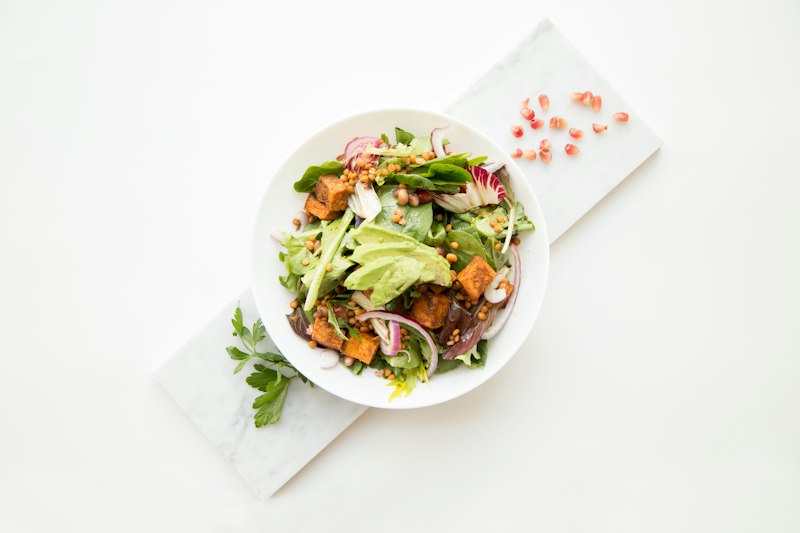
"Fibermaxxing" — deliberately loading your diet with as much fiber as possible — is one of the bigger nutrition trends of the year. Unlike most viral wellness fads, this one points at something real: roughly 90% of adults don't get enough fiber, and the health consequences of that gap are well documented. But the trend also gets ahead of the evidence in a few specific ways. Here's what the research actually supports, where the hype overshoots, and how to add fiber without making yourself miserable.
Most viral nutrition trends are some mix of harmless and useless. "Fibermaxxing" — the practice of deliberately maximizing dietary fiber intake, popularized through short-form video and wellness communities — is unusual because the core idea is genuinely well supported. The execution is where things get more complicated.
The basic premise is sound. An estimated 90% of adults worldwide do not meet recommended daily fiber intake [2]. Global average intake ranges from roughly 15 to 26 grams per day, while most national guidelines recommend somewhere between 25 and 35 grams. That gap is not trivial. Prospective cohort studies consistently link higher fiber intake with reduced risk of cardiovascular disease, type 2 diabetes, several common cancers, and all-cause mortality. A landmark series of systematic reviews and meta-analyses published in The Lancet in 2019 examined decades of data and found that people with the highest fiber intake had a 15-30% lower risk of cardiovascular mortality, coronary heart disease, type 2 diabetes, and colorectal cancer compared to those with the lowest intake [1].
So when fibermaxxing says "most people should eat more fiber," it is, unusually for a viral trend, just correct.
Fiber is not a single substance. It is a category — carbohydrate polymers that resist digestion in the small intestine and arrive in the colon largely intact. Once there, they do several different things depending on type.
Viscous soluble fibers — found in oats, barley, beans, and some fruits — slow gastric emptying and the absorption of nutrients, which blunts the post-meal blood sugar spike. This is a direct mechanical effect, and it is part of why high-fiber diets are associated with better glucose control.
Fermentable fibers — including inulin, resistant starch, and various others — are food for the gut microbiome. Specific gut bacteria metabolize these fibers and produce short-chain fatty acids such as butyrate, acetate, and propionate [3]. Butyrate in particular is a primary energy source for the cells lining the colon and has been studied for roles in gut barrier integrity, inflammation regulation, and appetite signaling [3]. A 2025 review in the journal Nutrients summarized the growing body of human trial evidence connecting fiber intake, microbiome shifts, and improved markers of glucose homeostasis [2].
Insoluble fibers — the structural parts of plants, like wheat bran and vegetable skins — mostly add bulk and speed transit through the gut, which is the straightforward mechanism behind fiber's well-established effect on constipation.
The takeaway is that "eat more fiber" is really "eat more of several different things that each do something useful." This matters for how you approach the trend.
Here is where editorial honesty is required. The trend, as it circulates online, has a few problems.
**More is not infinitely better.** The benefit curve for fiber is not linear forever. The Lancet analysis found the clearest benefits in moving from low intake (under 15 grams) up to the recommended range (25-35 grams) [1]. Beyond roughly 35-40 grams per day, the marginal additional benefit becomes small and less well documented, while the risk of digestive side effects climbs. "Maxxing" implies that pushing intake as high as possible is the goal. The evidence supports hitting an adequate level, not maximizing endlessly.
**Going from low to high overnight causes real misery.** The gut microbiome adapts to fiber intake gradually. A sudden jump from 15 grams to 50 grams per day reliably produces bloating, gas, cramping, and discomfort, because the bacterial populations that ferment fiber need weeks to adjust. Human intervention studies generally show microbiome and bowel-function changes emerging over a 2-4 week window. The trend's "load up immediately" framing sets people up for an unpleasant experience that makes them quit.
**Fiber supplements are not equivalent to fiber-rich foods.** Much fibermaxxing content centers on powders and supplements. These can help fill a gap, and some have genuine evidence behind them, but they deliver a narrow slice of what whole plant foods provide. Whole foods bring a diversity of fiber types, plus the polyphenols, micronutrients, and other compounds that come bundled with them. A supplement-heavy approach to fibermaxxing misses much of the point.
**Hydration matters and is often skipped.** Increasing fiber intake without increasing fluid intake can worsen constipation rather than relieve it, especially with bulking insoluble fibers. The trend rarely mentions this.
**Some people should be cautious.** People with irritable bowel syndrome, inflammatory bowel disease, or certain gastrointestinal conditions can react badly to rapid fiber increases or to specific fermentable fibers. For these people, "more fiber" is not universally good advice and is worth discussing with a clinician or dietitian.
The unglamorous, evidence-aligned version of the trend looks like this:
**Find your baseline first.** Most people have no idea how much fiber they currently eat. Tracking for a few days gives you a realistic starting point and tells you how big the gap actually is.
**Increase gradually.** Add 3-5 grams per day per week, not all at once. Give your microbiome and digestive system time to adapt. The discomfort that makes people abandon high-fiber diets is largely a speed problem, not a fiber problem.
**Prioritize whole foods and variety.** Beans, lentils, whole grains, vegetables, fruit, nuts, and seeds. Different sources provide different fiber types, and variety appears to support a more diverse microbiome than relying on a single source or a supplement.
**Increase fluids alongside fiber.** This is not optional, especially as bulk increases.
**Aim for adequate, not maximal.** The target is the recommended range — roughly 25-35 grams per day for most adults. Hitting that consistently is far more valuable than briefly spiking to 60 grams and then quitting.
**Use supplements to fill gaps, not as the foundation.** If you genuinely cannot reach adequate intake through food, a supplement can help. But it should supplement a food-based approach, not replace it.
Fibermaxxing is that rare viral trend built on a true premise: the large majority of people would benefit from eating more fiber, and the evidence connecting fiber to long-term health is among the more robust findings in nutrition science. If the trend gets more people eating beans and vegetables, that is a genuinely good outcome.
But the "maxxing" framing imports the optimization mindset that causes problems elsewhere in wellness culture — more is better, faster is better, supplements are shortcuts. The actual evidence supports something calmer: most people should move from inadequate fiber intake to adequate fiber intake, gradually, mostly through whole foods, with enough water. That is less exciting than "maxxing," but it is what the research supports and it is far more sustainable.
If you have a digestive condition, are planning a major dietary change, or aren't sure how to adjust your intake safely, a registered dietitian or your healthcare provider can give you guidance tailored to your situation in a way that no trend can.
How AliveAndKicking Health handles your data, in plain language.
AliveAndKicking Health Media ("we", "our", "us") operates this website. If you have questions about this policy or how your data is handled, you can reach us through the contact information on our About page.
You don't need to create an account, subscribe, or give us any personal information to read articles. We don't run comment sections, email capture forms, or user registration for readers.
When you visit the site, our hosting provider (Netlify) logs the following in line with standard internet practice:
These logs are kept by Netlify for a limited period for security and performance purposes. We do not read or analyse these logs ourselves.
We use your browser's localStorage — which functions similarly to cookies — to store a small amount of data locally on your device:
ak_local_articles, ak_local_nextid) — a copy of the articles list, so the site loads quickly and works offline. Strictly necessary for site function.ak_cookie_consent) — records your choice on the cookie banner, so we don't show it repeatedly.This data stays on your device. It is never sent to us or to any third party.
The fonts used on this site (Playfair Display and Source Sans 3) are self-hosted from our own server. No third-party font service receives requests from your browser. Both fonts are licensed under the SIL Open Font License.
If you consent to "Accept all" cookies, this site displays advertisements. Ads uses cookies and similar technologies to serve ads based on your prior visits to this site or other websites.
Our site is hosted on Netlify. Their privacy practices are documented at netlify.com/privacy.
If you are in the European Economic Area, the United Kingdom, or Switzerland, you have the following rights regarding any personal data we hold:
Since we collect almost no personal data directly, most of these rights are satisfied by you simply clearing your browser's site data. For anything else, contact us.
Our content is intended for a general adult audience. We do not knowingly collect data from children under 16. If you believe a child has provided us with data, please contact us and we will take steps to delete it.
You can change your cookie preferences at any time by clicking the button below. This will clear your previous choice and re-show the consent banner.
Browser storage persists until you clear it or withdraw consent. Netlify's server logs are retained according to their policy. We do not maintain separate databases of reader data.
Our hosting provider (Netlify) may process data in jurisdictions outside the EEA, including the United States. Netlify participates in appropriate data transfer frameworks such as the EU-US Data Privacy Framework and uses Standard Contractual Clauses where applicable.
If we update this policy, we will update the "Last updated" date at the top. For significant changes, we may re-show the consent banner.
For any privacy-related questions or to exercise your rights, please reach out via the contact details on our Contact page.
The ground rules for using AliveAndKicking Health.
By accessing and using AliveAndKicking Health ("the Site"), you accept and agree to be bound by these Terms of Use. If you do not agree to these terms, please do not use the Site.
All articles, images, graphics, and other content on this Site are protected by copyright and are the property of AliveAndKicking Health Media unless otherwise noted. You may read and share links to our articles freely. You may not republish, redistribute, or reproduce our content in whole or in substantial part without prior written permission.
AliveAndKicking Health, its authors, editors, and affiliates are not liable for any actions taken based on information found on this Site. Reliance on any information provided here is solely at your own risk.
We strive to provide accurate, up-to-date, and well-researched content. However, medical and health research evolves constantly, and we cannot guarantee that every article reflects the absolute latest consensus. If you spot an error, please let us know via the Contact page.
Our articles may contain links to third-party websites. We do not endorse, control, or take responsibility for the content or practices of these external sites. Visiting them is at your own discretion.
The Site may display advertisements served by Ad networks. We do not endorse the products or services advertised. Advertiser relationships are disclosed in our Privacy Policy.
You agree not to use the Site in any way that:
To the fullest extent permitted by applicable law, AliveAndKicking Health Media and its contributors shall not be liable for any indirect, incidental, special, consequential, or punitive damages arising from your use of or inability to use the Site.
We may update these Terms from time to time. The "Last updated" date at the top indicates the most recent revision. Continued use of the Site after changes constitutes acceptance of the revised Terms.
For questions about these Terms, please reach out via our Contact page.
What this site is — and what it isn't. Plain language about the limits of the information we publish.
If you are experiencing a medical emergency, call your local emergency number or visit the nearest emergency department immediately. Do not use this site to seek help for an urgent or life-threatening situation.
Reading articles on AliveAndKicking Health does not create a doctor-patient, therapist-client, or any other professional relationship between you and the site, its contributors, or anyone associated with it. We are journalists writing about health research, not licensed clinicians providing care. We cannot assess your individual circumstances, examine you, review your medical history, or prescribe anything.
We do our best to provide accurate, well-sourced, and current information. Every article cites peer-reviewed research, official health guidelines, or other primary sources, and we link to those sources at the bottom of each piece so you can verify the underlying evidence.
That said, medical and scientific understanding evolves continuously. New research can change what is considered best practice, sometimes within months. While we aim to update articles as significant new evidence emerges, we cannot guarantee that every article reflects the absolute latest consensus at the moment you read it. When making decisions that affect your health, please verify with a qualified professional and check whether more recent research has emerged.
If you spot an error, please contact us — we publish corrections promptly with a dated note.
Our articles link to external sources — peer-reviewed studies, news outlets, health organizations, and similar resources — to allow readers to verify our claims. Linking to a source does not constitute a general endorsement of that source's other content, services, or commercial offerings. We endorse only the specific information cited, in the context cited.
We have no control over external websites and cannot guarantee that linked content remains accurate, available, or unchanged after we publish.
This site may display advertisements served by third-party advertising networks. Advertisements are clearly distinguished from editorial content. We do not endorse or vouch for products or services advertised on the site, and we do not have editorial control over which ads are shown to individual readers.
We do not accept payment in exchange for editorial coverage. Articles are not influenced by advertiser relationships.
Our articles sometimes evaluate commercial products — supplements, diets, devices, treatments, or wellness services — based on the available scientific evidence. These evaluations are editorial opinions grounded in cited research. They are not personal recommendations for you specifically. A product we describe as well-supported by evidence may still be inappropriate for your individual circumstances; a product we describe as overhyped may still have niche legitimate uses. Always discuss specific products with a qualified professional before using them, especially if you have existing health conditions or take medications.
You are responsible for your own health decisions. Information from this site is one input among many that should inform those decisions, alongside guidance from your healthcare providers, your knowledge of your own body, and other reliable sources.
To the fullest extent permitted by applicable law, AliveAndKicking Health Media, its contributors, editors, and affiliates are not liable for any direct, indirect, incidental, consequential, or punitive damages arising from your use of, or reliance on, information published on this site. Reliance on any content is solely at your own risk.
This disclaimer is intended to operate alongside the limitation of liability set out in our Terms of Use, not in place of it.
We may update this disclaimer from time to time as our content, services, or applicable best practices change. The "Last updated" date at the top of this page indicates when the most recent revision was made. We encourage readers to review this page periodically.
If you have questions about anything on this page, please reach out through our Contact page.
How AliveAndKicking Health selects topics, evaluates sources, writes articles, and handles corrections. This is the page that explains how the journalism actually gets made.
AliveAndKicking Health is an independent health journalism site. Our role is to read health and medical research, summarise what it actually shows, and link out to the original sources so readers can verify the claims themselves. Where the evidence is uncertain or contested, we say that. Where the science is settled, we say that too.
We are not a medical publication. None of our editors are practicing clinicians, and we do not provide diagnosis, treatment, or personalized medical advice. Articles on this site are journalism, not medicine — they are intended to inform conversations with qualified healthcare providers, not replace them.
We choose article topics based on three criteria:
We do not select topics based on advertiser preferences, affiliate revenue potential, or sponsor relationships. We have no advertisers or sponsors with editorial influence over which topics we cover.
Every article is built on cited sources. Our preferred source hierarchy, in descending order:
We avoid the following as primary sources: wellness blogs, supplement-industry websites, content farms, self-published health books, anecdotal reports, social media posts, and press releases not backed by published research. Where we reference any of these, we do so explicitly and as the subject of the article, not as evidence supporting a claim.
[1], [2] markers you see throughout each article) are placed after the specific claim each source supports, not at the end of a paragraph as a catch-all.We use AI assistance for parts of the editorial process — including initial research synthesis, draft generation, and copy editing. Every article is reviewed by a human editor before publication, with particular attention to:
We are transparent about this because we think the alternative — using AI tools but pretending otherwise — is the more concerning practice. AI assistance does not change the standard articles must meet before publication; it just changes some of the workflow used to get there.
We treat factual errors seriously. If we publish something inaccurate, we want to know — and we publish corrections promptly.
To request a correction, send an email to contact@aliveandkickinghealth.com or use the Contact form. Include:
Timing. Material errors — factual mistakes, misstated statistics, miscited sources, broken attributions — are reviewed within 2 business days and corrected within 5 business days of confirmation. Minor errors (typos, formatting, broken links) are corrected silently as we find them.
How corrections are shown. For material corrections, we append a dated note at the bottom of the affected article describing what was changed and when. The original error is not silently overwritten — readers should be able to see that an article was updated and why.
If the entire article is wrong. In rare cases where the central premise of an article turns out to be unsupportable, we either issue a substantial revision (with a clear note explaining what changed) or retract the article entirely. Retracted articles are replaced with a page explaining the retraction; the URL is not silently repurposed.
We do not accept payment in exchange for editorial coverage. We do not write sponsored articles, sponsored sections, or "native advertising" disguised as editorial content. We do not allow advertisers, affiliates, or commercial partners to review, shape, or veto editorial content before publication.
Our editorial team does not hold financial positions in companies whose products are evaluated in our articles. Where an editor has a personal connection to a topic that could reasonably be seen as a conflict, they do not write about that topic, or the conflict is disclosed at the top of the article.
We do not accept free products, paid trips, or other benefits from companies in exchange for coverage. Where we evaluate commercial products (supplements, devices, diets, services), the evaluation is based on the published evidence, not on access provided by the manufacturer.
Our articles link to external sources to allow readers to verify our claims directly. Linking to a source does not constitute a general endorsement of that source's other content, commercial offerings, or unrelated views. We endorse only the specific information cited, in the context cited.
We have no control over external websites and cannot guarantee that linked content remains accurate, available, or unchanged after we publish. If a link breaks, please let us know via the Contact page.
We welcome reader feedback, particularly on factual accuracy, source quality, and topics readers think we should cover. Editorial inquiries, corrections, and topic suggestions can be sent to contact@aliveandkickinghealth.com or submitted through the Contact page. We aim to respond within 5 business days.
We may update this editorial policy from time to time as our processes evolve. The "Last updated" date at the top of this page indicates when the most recent revision was made. Significant changes to editorial standards, source policy, or corrections handling will be noted in a brief changelog at the bottom of this page when they occur.
We'd love to hear from you — feedback, corrections, or just a hello.
For editorial inquiries, content corrections, partnership proposals, or general questions, please use the following contact methods:
For inquiries: contact@aliveandkickinghealth.com
We aim to respond to all inquiries within 5 business days.
If you find a factual error in any of our articles, please reach out with:
We review every correction request and publish updates with a dated revision note at the end of the affected article.
We are a small team committed to evidence-based, accurate, and accessible health information. All medical claims are reviewed against peer-reviewed research, guidelines from reputable health authorities, and current clinical consensus. We do not accept payment in exchange for editorial coverage.